Will Cooling Sheets Feel Too Cold in Winter

Cooling sheets are not designed to drop your body temperature. They move heat and moisture away from your skin more easily than a denser weave. In a winter bedroom that sits in the mid-60s, that same property keeps the surface next to you from feeling clammy once you are under a proper top layer.
What cooling actually means on sheets

Most “cooling” sheets use an open weave or a fiber that moves moisture. Percale is a plain weave: each thread crosses over and under the next, leaving small gaps for air. Linen is a loose plain weave in flax that absorbs and releases moisture quickly. Rayon from bamboo is smooth and wicks surface moisture faster than standard cotton.
None of these constructions actively cool you. They simply do not trap heat and sweat against the skin the way a tight sateen or flannel can. Once your body heat builds under the covers, the sheet itself warms up. The difference is that excess heat and moisture have somewhere to go instead of staying trapped.
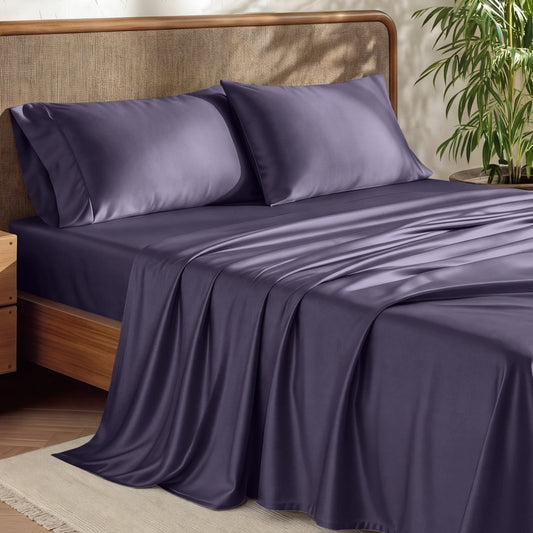
The Organic Cotton Percale Sheet Set is the classic version of this. The European Linen Sheet Set and the Rayon From Bamboo Sheet Set do the same job with different fibers. Confirm fiber content and weave on the specific product page.
How they feel when the room is cold
A cooling sheet feels cool for the first minute or two when you get in. That is the fabric at room temperature. After that, it warms to your skin. If the room is cold and you have only a light top layer, you will feel cold regardless of the sheet. The sheet is not the insulating layer.
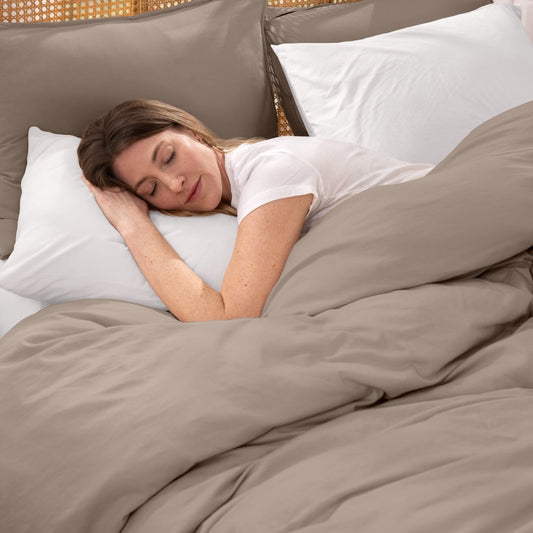
Most people who switch to flannel or a heavier sheet in winter are solving the wrong problem. The top layer (duvet insert, comforter, or quilt) is what traps the air that keeps you warm. A breathable sheet underneath simply keeps the surface next to your body from getting damp. Damp fabric feels colder than dry fabric at the same temperature.
If you already like the hand of percale or linen, keep the sheets and change only the top layer when the furnace comes on. A light insert that worked in September often needs a quilt or a heavier insert by December. The sheets stay the same.
Keeping the same sheets through winter
Start with the sheets you already sleep well in. Add loft only where you need it. A quilt or coverlet over a light duvet insert gives you a middle option you can remove if the room warms up overnight. A full comforter goes on only when the loft itself is useful.
Avoid stacking a dense, non-breathable top sheet or a heavy flannel under a high-loft comforter. That combination traps moisture and heat in a way that makes some people kick everything off. The breathable sheet plus an adjustable top layer is usually easier to manage.
Shop breathable options in the percale collection, linen collection, and bamboo collection. Every item is OEKO-TEX Standard 100 certified. GOTS applies only to select organic products.
The short version
-
Cooling sheets move heat and moisture. They do not lower your body temperature.
-
They feel cool for the first minute because the fabric is at room temperature. After that they warm to your skin.
-
The top layer, not the sheet, is what keeps you warm in winter. Keep the breathable sheet and change the duvet or quilt.
-
A damp sheet feels colder than a dry one. Breathable weaves reduce that problem.
-
Most people can use the same percale, linen, or bamboo sheets year-round if they adjust only the loft on top.
Shop The Products We're Talking About


Keep Reading
All-Season vs Seasonal Duvet or Comforter
How Long Do Sheets Last (by Fabric Type)