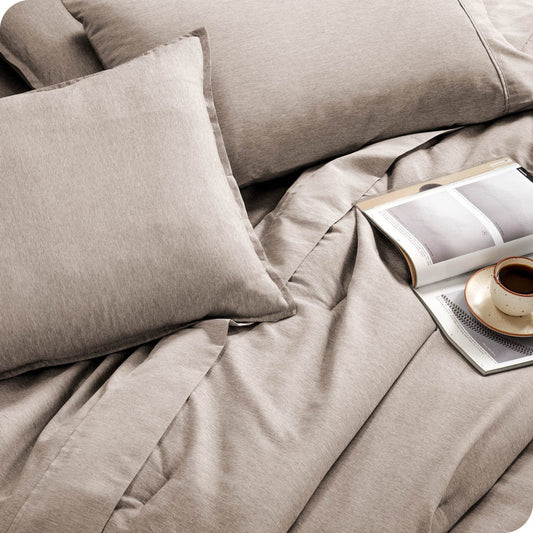
All-Season vs Seasonal Duvet or Comforter

An all-season duvet or comforter uses a medium fill weight meant for rooms that stay roughly the same temperature year-round. A seasonal version is lighter for warmer months or heavier for colder ones, and you swap it when the room changes. The practical difference is whether your bedroom stays stable or swings enough that one weight leaves you too warm or too cool.
What all-season actually means

In the U.S. market, all-season typically points to a moderate fill density, often in the 250 to 300 GSM range for down-alternative fills. That amount of insulation holds enough warmth for a heated bedroom in the mid-60s to low-70s °F and stays light enough not to overheat the same room when it is air-conditioned in summer. It is a compromise weight, not a claim that the piece works in every climate.
The fill itself (down alternative or down) traps air. More fill traps more air and holds more heat. A medium amount works when the room itself does most of the temperature control. If your bedroom drops below about 62 °F at night or climbs above 75 °F without air conditioning, the same fill becomes too light or too heavy. Bare Home sells duvet inserts and comforters and quilts as separate pieces so you can choose a cover or a finished comforter.
Seasonal options and when the switch matters
Seasonal means dedicated weights: a lighter fill (often under 250 GSM) for warmer rooms and a heavier fill (often over 300 GSM) for colder ones. Some systems pair two pieces that can be used separately or together. The advantage is that each piece is optimized for its range instead of averaging both. The cost is storage space and the twice-a-year swap.
You know it is time to switch when you consistently kick one leg out at night or wake colder than usual. In a Minnesota climate, for example, many rooms need the heavier option once outdoor temperatures stay low and indoor heat is the only buffer. In milder or tightly controlled rooms, the medium weight can stay in place most of the year. A duvet system makes the switch simpler because the cover stays on the bed and only the insert changes. Bare Home’s duvet covers work with any insert, so the outer layer can stay the same while the fill weight changes.
Duvet versus comforter for this choice
A duvet is an insert inside a removable cover. You can change the insert for a different weight without replacing the cover, and the cover can be washed more often than a filled piece. A comforter has the fill sewn inside a finished shell. It is simpler to put on the bed but harder to adjust for season: you either live with the weight you bought or store the whole thing and use a different one.
For all-season versus seasonal, the duvet format gives more flexibility. You can keep one cover and own two inserts if your room swings, or use one medium insert if the room stays steady. A comforter works if you already know the single weight that fits your space and you prefer fewer pieces. Both formats appear in Bare Home’s catalog. Every item is OEKO-TEX Standard 100 certified.
The short version
All-season is a medium fill. It is built for climate-controlled rooms that stay roughly 65 to 72 °F, not for every climate.
Seasonal means dedicated weights. Lighter for warmer rooms, heavier for colder ones, or a pair you use separately or together.
Room temperature decides the choice. Measure how your bedroom actually behaves at night before you pick one weight for the year.
A duvet insert is easier to swap. The cover stays; only the fill changes when the season shifts.
A comforter is a single finished piece. It works if one weight already fits and you do not want to store a second option.
Shop The Products We're Talking About


Keep Reading
Why White Sheets Turn Yellow
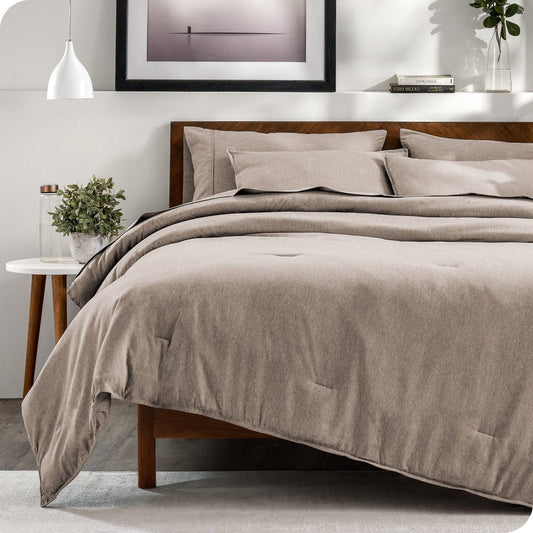
How to Layer Bedding Properly