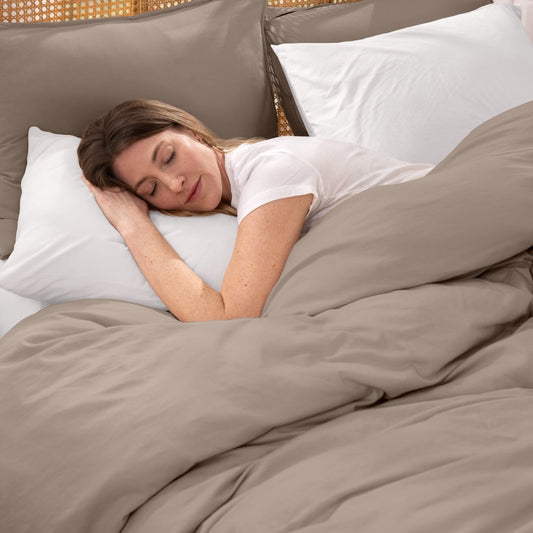
Percale vs Sateen vs Linen Sheets

What is percale?
Percale uses a plain weave: one thread over, one thread under, repeated. The result is a tight, even fabric with a matte surface and almost no sheen. It feels crisp when new, like a well-pressed shirt, and softens a little with washing without losing that dry, cool hand.
Because the weave is open enough for air to move and the surface has little loft, percale stays cooler than most other cotton constructions. Hot sleepers and people who prefer the hotel-sheet feel usually choose it. It wrinkles more than sateen and does not trap as much warmth, which is the trade-off for the crispness.
Bare Home’s organic cotton percale appears in the percale collection.
How percale compares to sateen and linen
Percale vs. sateen
Sateen uses a float weave. The weft thread passes over several warp threads before going under one. Those longer floats create a smoother, slightly lustrous surface that drapes closer to the body and feels softer from the first night. The same cotton fiber can feel warmer in sateen because the floats reduce airflow compared with the plain weave of percale.
People who want a silkier hand and do not run hot usually prefer sateen. People who want the matte, cool, just-made look prefer percale. Thread count alone does not decide this. A 300-count percale and a 300-count sateen are different fabrics because the weave packs the threads differently.
You can compare the two constructions in the sateen collection and the percale collection.
Percale vs. linen
Linen is made from flax, not cotton. The fibers are longer and coarser at first, so new linen sheets feel more textured and sometimes slightly slubby. They absorb moisture well and allow strong airflow, which is why many hot sleepers like them. Linen also softens noticeably with every wash and becomes more pliable over time.
Percale stays more consistent in hand after the first few washes. Linen keeps changing. Percale wrinkles, but linen wrinkles more. Both are breathable. Linen’s natural fiber structure usually moves air a bit more freely than cotton percale.
Bare Home’s European linen sits in the linen collection.
Sateen vs. linen
Sateen feels smoother and more polished on night one. Linen feels more lived-in and continues to soften. Sateen holds a subtle sheen. Linen stays matte. If you want drape and immediate softness, sateen is the closer match. If you want maximum airflow and do not mind texture or wrinkles, linen is the closer match.
Choosing between the three
Start with temperature. If you sleep hot or keep the room warm, percale or linen will usually feel better than sateen. If you run cold or like the sheets to feel soft against your skin right away, sateen is the more common choice.
Then decide how much the fabric can change. Percale and sateen stay relatively stable after the first wash. Linen keeps softening and relaxing. If you want the same feel every night for years, stay with cotton. If you like a fabric that evolves, linen does that.
Care is similar across all three: cold or warm wash, low heat dry, and no fabric softener if you want to keep the fibers open. Check the care label on the specific set. Pocket depth still matters more than weave for whether the fitted sheet stays on. Measure the stacked height of your mattress plus protector before you buy.
The fabrics page walks through the constructions in one place if you want to see them side by side.
The short version
Percale is a plain weave. One thread over, one under. It stays matte, crisp, and cooler than most other cotton sheets.
Sateen is a float weave. Longer floats create a smoother, slightly lustrous surface that drapes more closely and can feel warmer.
Linen is flax, not cotton. It starts more textured, softens with every wash, and moves air well.
Weave beats thread count. The same fiber number can describe very different fabrics once the weave changes.
Hot sleepers usually prefer percale or linen. Sateen is the more common choice when you want immediate softness and do not overheat.
All three are available as sheets and duvet covers. Start with how you sleep, then match the construction.
Shop The Products We're Talking About


Keep Reading
Percale vs Sateen Sheets: Which Weave Sleeps Cooler
Will Cooling Sheets Feel Too Cold in Winter