Fall-to-Winter Bedding Transition Without Overheating

Most bedrooms do not jump from summer to deep winter overnight. They sit in the mid-60s for weeks after the air conditioning goes off and before the furnace runs every night. The bedding that worked in September is usually only a little short. Replacing the whole top layer with high loft is the move that creates the overheating problem later.
What changes between fall and winter
The room temperature drops, but your body still produces the same heat once you are under the covers. Loft (trapped air inside a filled comforter or insert) is insulation. More loft keeps more of that heat in. In a mild fall room a high-loft piece often feels good for the first twenty minutes and then gets kicked off. By the time the furnace is on every night, the same piece can still be too much if you layered it on top of everything else.
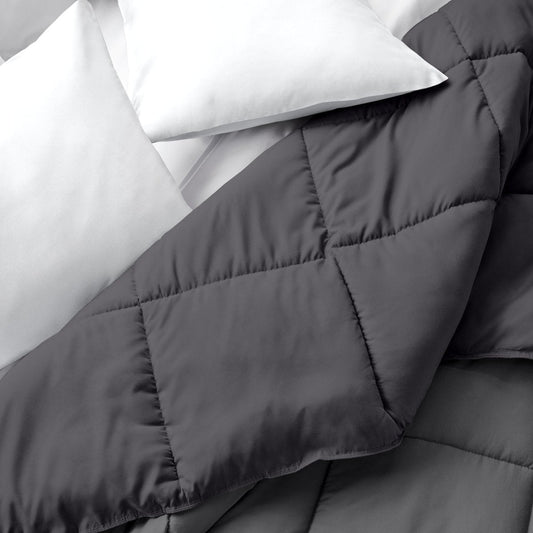
A quilt is stitched layers with less loft than a filled comforter. It drapes and adds a little warmth without the full air cushion. A light duvet insert under a cover does the same job and lets you wash the outer layer separately. The sheets underneath should stay breathable so moisture does not stay against your skin. Damp fabric feels colder at first and then holds heat in a way that makes some people overheat later in the night.
How to add warmth without locking it in

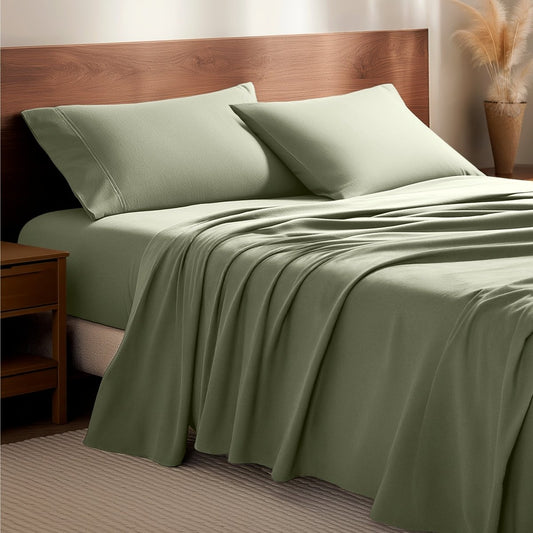
Keep the sheets you already like if they move air. Percale, linen, or rayon from bamboo stay more breathable than a dense sateen or flannel. Then add the next layer as something you can remove. Put a quilt over a light insert, or fold the quilt at the foot so half the bed has the extra layer and half does not.
The Ultra-Soft Quilt Set is built for this middle step. It layers over a duvet without adding the full loft of a winter comforter. Pair it with the Ultra-Soft Duvet Insert if you want a removable cover. Keep a breathable base such as the Organic Cotton Percale Sheet Set so the surface next to you does not trap moisture.
When to add the heavier layer
Add the full loft only when the room is cold enough that you are still cool after twenty minutes under the lighter stack. In most houses that is later than people expect. If you wake up hot, the first fix is to remove the top quilt or open the duvet cover, not to switch the sheets. A piece that drapes and can come partway off is easier to manage than one high-loft insert that has to leave the bed entirely.
Shop the middle layers in comforters and quilts and the fills in duvet inserts.
The short version
-
Fall-to-winter rooms usually need a little more loft, not a full winter comforter right away.
-
A quilt over a light insert adds warmth you can remove if you wake hot.
-
Keep breathable sheets. The top layer is what changes with the season.
-
High loft traps air. That is useful only when the room is actually cold enough for it.
-
If you kick layers off, the stack is too warm. Remove the top piece before you replace the sheets.
Shop The Products We're Talking About


Keep Reading
Quilt vs Coverlet vs Blanket as a Layer
How Many Pillowcases to Own