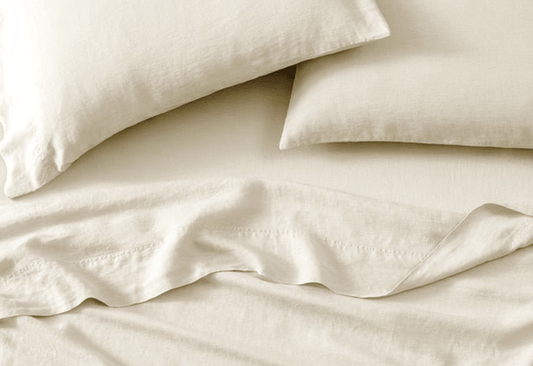
The Best Cooling Sheets for Hot Sleepers

A lot of people buy “cooling” sheets, sleep great for a week, and then wake up sweaty again. The sheet set felt slick on night one. By month two it clings, traps heat, and gets kicked off at 2 a.m.
Cooling is not magic. It is fiber, weave, weight, and whether the fabric can move moisture off your skin. Marketing copy makes those four things hard to read on a product page.
This guide covers the questions hot sleepers ask most: night sweats, humid climates, perimenopause heat, percale vs sateen, linen wrinkles, bamboo softness, and whether a high thread count helps. No mystery cooling technology. Just what actually stays cool after the first wash.
What cooling sheets actually do
Sheets do not lower the room temperature. They either let heat and moisture leave your body, or they trap both against it.
Breathable sheets usually do three things at once:
• Airflow. A looser or simpler weave (percale, linen) leaves space for air to move.
• Moisture management. Natural fibers like cotton, linen, and rayon from bamboo can absorb and release sweat instead of leaving a damp film on your skin.
• Surface feel. A crisp, dry hand feels cooler than a slick, dense one - even when the fiber is the same.
That is why a mid-weight percale set often beats a heavy sateen set with a much higher thread count. Density holds heat. Open structure lets it go.
The four fabrics that work best for warm sleepers
-
Cotton percale - the default cool pick
Percale is a plain weave: one thread over, one under. The result is a matte, crisp sheet with that hotel-bed snap. It starts a little firm and softens with washing without turning mushy.

Long-staple cotton percale is the most reliable everyday answer for year-round hot sleepers and summer climates. It does not cling, does not feel plasticky, and holds up to weekly washing better than most sateen.
If you want that crisp, cool baseline, start with Bare Home’s Organic Cotton Percale Sheet Set: https://barehome.com/products/organic-cotton-percale-sheet-set
It is 100% GOTS-certified organic cotton in a breathable 260-thread-count percale weave, OEKO-TEX Standard 100 certified, with a fully elasticized fitted sheet that fits mattresses up to 15 inches deep. The count sits in the range where cotton still breathes instead of turning into canvas.
Match the top of the bed with the Organic Cotton Percale Duvet Cover Set: https://barehome.com/products/organic-cotton-percale-duvet-cover-set
A lightweight percale cover over a light insert is one of the simplest ways to stop a heavy comforter from undoing a good sheet choice. Corner ties keep the insert from bunching, which also helps airflow stay even.
-
Linen - best temperature regulation, wrinkles included
Linen fibers are hollow, which is why they move heat and moisture so well. Linen works especially well for hot sleepers in humid climates, people who want bedding that gets better with age, and anyone who would rather live with wrinkles than wake up damp.
The tradeoff is real: linen starts textured, looks rumpled on purpose, and costs more than cotton. If you can live with that lived-in look, it is one of the few fabrics that feels cool in July and still usable in January.
Bare Home’s European Linen Sheet Set is built for that exact job - breathable flax linen that wicks moisture, regulates temperature, and softens over time instead of wearing out. It is the pick when you want weight without heat.
https://barehome.com/products/linen-sheet-set
-
Rayon from bamboo - soft first, cool second

Bamboo bedding (usually rayon or viscose made from bamboo pulp) is the option when you want cooling without the crisp feel of percale or the wrinkles of linen. The surface is silky. Moisture-wicking is strong. It is a common pick for night sweats and people who dislike a dry, papery hand.
The honest caveats: cheaper bamboo can pill, and some sets need gentler washing than cotton. Quality long fibers matter more here than a luxury label.
For a smooth, moisture-wicking option, Bare Home’s Rayon from Bamboo Sheet Set is OEKO-TEX certified, silky from night one, and designed to stay cool and dry for warm sleepers. It is the right move if percale feels too crisp and linen feels too casual.
https://barehome.com/collections/bamboo-collection/products/bamboo-sheet-set
-
Cotton sateen - only if you run mildly warm
Sateen uses a float weave that puts more yarn on the surface. That is why it feels buttery and looks slightly lustrous. It is also why it holds a little more heat than percale.
If you like a soft, polished sheet and do not overheat badly, sateen is fine - especially in a moderate thread count. If you already kick the blankets off by midnight, skip it as your everyday set and keep it for cooler months.
A simple decision chart
• Sleep hot most nights, want a classic feel: organic cotton percale sheets + a percale duvet cover.
• Sleep hot and hate clinging, okay with wrinkles: European linen.
• Sleep hot and want silky-soft, not crisp: rayon from bamboo.
• Run only a little warm and want drape: cotton sateen, not ultra-high thread count.
• Share a bed with opposite temperatures: cool sheets underneath, lighter cover on top, extra blanket on the cold sleeper’s side.
What to ignore on the label
Thread count above the mid-range is the most common trap. Once cotton is densely packed, air stops moving. A well-made 260–400 count percale will usually sleep cooler than an 800–1,200 count sateen made from shorter fibers.
Certifications are the useful part of the label. GOTS organic cotton and OEKO-TEX Standard 100 do not make a sheet colder, but they do tell you the fabric was not finished with a mystery chemical coating that can change how it feels against skin.
How to keep cooling sheets actually cool
• Wash before the first night. Cotton and linen both settle and breathe better after a wash.
• Skip heavy fabric softener. It coats fibers and reduces wicking.
• Tumble low or line dry. High heat breaks fibers and can make sateen and bamboo pill faster.
• Lighten the layer above you. The best percale sheet cannot save a trapped, overfilled comforter.
• Rotate two sets. Weekly washing is normal for hot sleepers. Two sets last longer than one hero set you over-wash.
The short answer
If you sleep hot, buy breathable fiber in an open weave and keep the layers light. Percale cotton is the most reliable everyday answer. Linen is the best regulator if you like texture. Rayon from bamboo is the soft, moisture-wicking middle path.
Build the bed in that order: organic percale sheets against the skin, a percale duvet cover on top, and linen or bamboo in the rotation if you want a second feel. Cool sleep is less about a miracle fabric and more about not trapping heat in the first place.
Percale sheets: https://barehome.com/products/organic-cotton-percale-sheet-set
Percale duvet cover: https://barehome.com/products/organic-cotton-percale-duvet-cover-set
Shop The Products We're Talking About


Keep Reading

Keeping Cool During Summer Heat: A Guide to the Best Sheets
Why You Need Bamboo Sheets