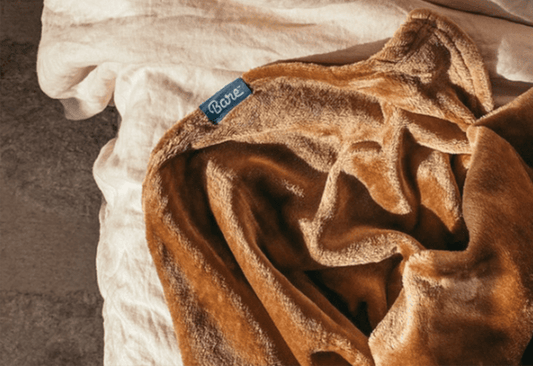
How to Layer Bedding for Fall

1. Start with the sheet, not the throw
The sheet is the only layer against your skin all night. If that layer holds heat you do not want, no quilt at the foot of the bed will fix it.
Percale and linen stay useful into early fall if your room still runs warm. When nights drop and you want a napped surface, switch the sheet, not just the blanket. Brushed cotton (flannel) traps a thin layer of air in the raised fibers. That is the warmth, not a secret fiber blend.
If you already own a summer set you like, keep it in rotation for the first cool week. One extra set in a different weight is more useful than a third identical cotton set. Bare Home cotton flannel sheets sit in that winter-weight slot.
2. Measure stacked height before you change pocket size
Fall is when people add a protector or a thin topper and then wonder why the fitted sheet creeps. Pocket depth is measured against stacked height: mattress plus protector plus topper, not the mattress tag alone.
3. Use a duvet cover as the washable mid layer

A comforter is the fill and the shell sewn together. You wash the whole thing. A duvet is an insert plus a cover. You wash the cover on the same cadence as sheets and wash the insert far less often.
That split matters in fall because you will sweat some nights and reach for extra weight on others. Changing a cover is faster than wrestling a king comforter into a home machine. Look for inner ties so the insert does not collapse to the foot of the bed, which is the usual reason a fluffy setup feels lumpy by morning.
Shop duvet covers first if you already have an insert that still lofts. If the insert has gone flat or the corners never fill, replace the insert rather than buying a heavier comforter on top of a dead one. Bare Home duvet inserts are the fill layer.
4. Add a quilt or throw at the foot, not a second full comforter
Two filled pieces on the whole bed trap heat you cannot vent without peeling everything. A quilt or a folded throw at the foot is a zone you pull up over your torso and leave off your feet. That is how you handle a hot sleeper and a cold sleeper in the same week without buying a new insert.
A quilt is stitched through, lower loft, easier to fold. A throw is smaller than the mattress on purpose. Neither should hang like a hotel bedspread unless you like making the bed twice. If you want the extra piece to live on the bed all season, fold it in thirds at the foot so it is grab-and-pull, not decorative dead weight.
Bare Home keeps quilts and comforters in one collection: comforters and quilts. Use a quilt as the optional fourth layer. Skip stacking a comforter on a duvet.
5. Build the bed so a layer can come off in the dark
Tuck the fitted sheet. Leave the flat sheet (if you use one) with enough slack to kick down. Lay the duvet so it drapes the sides you actually feel, not so long that it pools and drags when you turn.
Skip hospital corners on the top layers in fall. Tight tucks lock heat in and make it harder to shed a layer at 2 a.m. If you share the bed and fight over covers, two Twin or Twin XL duvets on one Queen or King solves that without a new mattress. Twin XL is longer than Twin, which matters on a Queen length.
Pillowcases follow the sheet fabric, not the decorative sham. Shams sit in front at make-up time and come off the sleep surface at night. That is styling. It is not insulation.
The short version
Sheet first. Change fabric weight when nights drop. Do not hide a warm-weather sheet under a heavier comforter and expect the stack to breathe.
Measure stacked height. Standard pockets fit 7 to 14 inches. Deep fits 15 to 17. Extra-Deep fits 18 to 25, including toppers.
Cover over the comforter for laundry. Wash the duvet cover with the sheets. Wash the insert on a longer cycle.
Foot-of-bed layer, not a second fill. A quilt or throw you can pull up is adjustable. Two comforters are not.
Leave the top layers loose. Fall rooms swing. You need to drop a layer without remaking the bed.
Ties keep loft where you put it. An untied insert slides to the bottom edge and leaves cold corners.
Shop The Products We're Talking About


Keep Reading
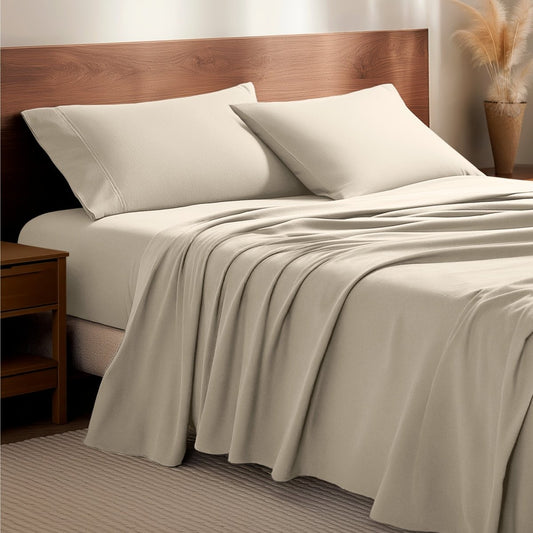
Flannel vs Jersey vs Microplush Sheets
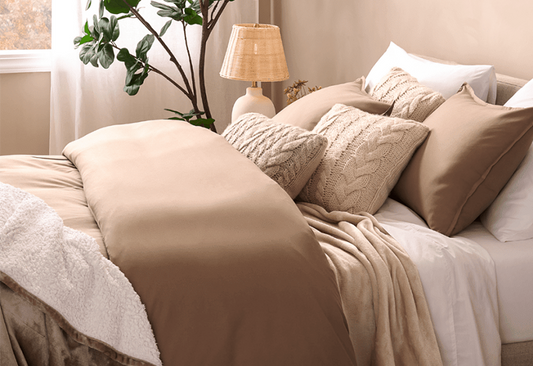
Mastering Layers for Crisp Autumn Nights