Flannel vs Jersey vs Microplush Sheets

What flannel, jersey, and microplush actually are
Flannel: a brushed cotton weave
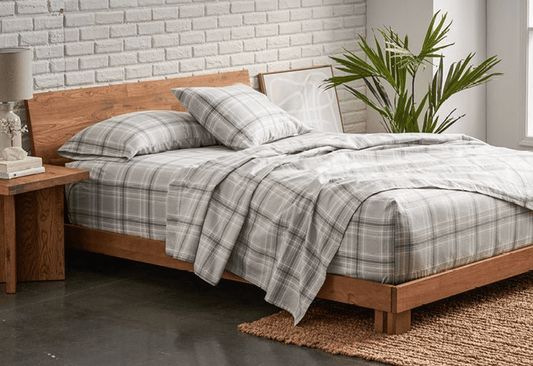
Bare Home’s cotton flannel sheet set is 100% cotton flannel, available in both organic and non-organic options. The fabric is mid-weight and double-brushed, so a fuzzy nap sits on both sides of the fabric.
Brushing raises fiber ends on purpose. Those ends trap a thin layer of still air against the sheet, which is why flannel feels warmer than a plain cotton weave of similar weight. The same raised surface is also why flannel can pill if the nap gets rubbed hard in the wash or against dry heels.
Cotton flannel is designed to shrink after the first wash. Wash it before you put it on the bed, in cold water, then tumble dry low. Do not bleach.
Jersey: a knit, not a weave

Jersey is the construction people mean when they say T-shirt sheets. Bare Home’s organic cotton jersey sheet set is 100% certified organic cotton in a jersey knit. The set uses combed, ring-spun yarn. That product is GOTS certified. It is also OEKO-TEX Standard 100 certified, which is the catalog-wide standard.
A knit is looped, not interlaced the way percale or sateen is. Loops give the sheet stretch and a lived-in feel from night one. They also mean the sheet can grow a little slack at the corners if the pocket is fighting a tall stack of mattress plus pad. Knit stretch helps the sheet move with you. It does not add the same trapped-air layer a brushed nap does.
Wash before first use, cold water, gentle cycle, tumble dry low. Skip bleach, fabric softener, and dryer sheets on this set. Softener coats the yarn and cuts the breathability the knit is there to give you.
Microplush: a polyester fleece pile

Bare Home’s microplush fleece sheet set is 100% polyester microplush fleece with a deep pile. The collection page groups it with other plush, warm fabrics. It is OEKO-TEX Standard 100 certified.
Polyester fleece is a pile fabric. The loft you feel is cut fiber standing off the ground cloth, not a cotton nap. That pile holds air the same way a fleece jacket does, and it does not wrinkle the way cotton does. Care on the product page is simple: machine wash cold with similar colors, tumble dry low, do not bleach.
How they feel, pill, and shed
Nap, pile, and pills
Pilling is loose fiber rolling into knots on the surface. You get more of it where the construction already leaves fiber ends exposed.
Flannel starts with those ends raised. Gentle washing keeps the nap. Hot dryers, overloaded drums, and washing sheets with towels grind the nap into pills. Cotton pills often break off. That looks messy for a while, then the surface settles.
Microplush starts as a polyester pile. Polyester is a strong filament, so pills that form tend to cling instead of falling away. Cold water and a low dryer setting slow that down. They do not erase it if the sheet is sharing the drum with zippers and denim.
Jersey has no brushed nap, so it does not shed the way flannel can. Knit loops can still snag. Pills show up at the foot of the bed and along the wash crease first. Combed, ring-spun yarn reduces short fibers in the yarn, which helps. Fabric softener works against you here.
Stretch versus grip
Jersey moves. That is the point of a knit. If you hate a sheet that feels locked in place, the knit is the mechanism you want.
Flannel and microplush are more stable on the surface. The fitted sheet still needs enough pocket and elastic to stay on. Bare Home lists deep pockets on the jersey and microplush sets. Measure your mattress plus pad plus topper and match it to the pocket band on the size you buy.
When brushed cotton is too warm
Flannel feels warm because the nap holds air next to your skin. If you already sleep hot, or the bedroom stays heated overnight, that extra still air is the problem, not the cotton itself.
Use jersey when you want a soft, stretchy sheet without a fuzzy layer against you. The organic jersey set is the one built for that hand. Use microplush when you want pile and you do not mind a synthetic fleece next to the skin. Use flannel when the room is actually cold and you want the nap working.
You can also split the job. A jersey fitted sheet against you, with a flannel duvet cover on top, keeps the brushed layer off your skin and still gives the bed a winter surface. That mix is often enough when one person wants flannel and the other does not.
How to choose among the three
Pick by construction.
-
Choose flannel if you want a cotton sheet with a fuzzy nap on both sides
-
Choose jersey if you want T-shirt stretch, organic cotton, and no brushed pile.
-
Choose microplush if you want a polyester fleece pile that stays smooth-looking and does not wrinkle like cotton.
Shop The Products We're Talking About


Keep Reading

What Makes Bedding Hypoallergenic?