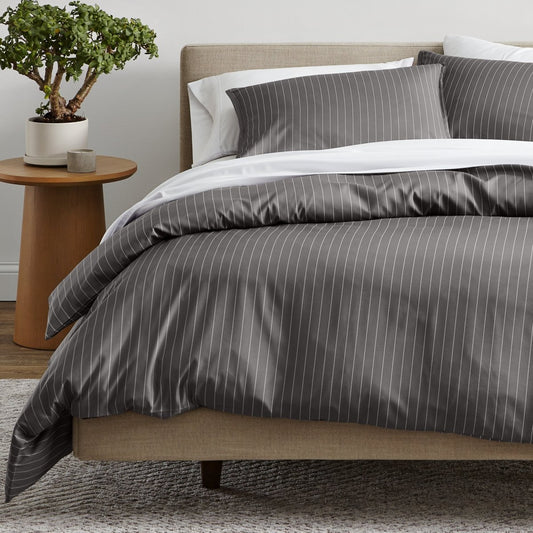
Guest Room Bedding for Fall Weekends

You cannot interview a weekend guest about whether they sleep hot. The useful setup is one stack that starts a little cool and has a second layer within reach, not one heavy comforter that works only if they happen to run cold.
Fall weekends make that harder because the guest room is often the last room you heat, and overnight swings of 10 degrees are common. Build the bed so they can peel a layer at 2 a.m. without remaking anything.
1. Assume you do not know how they sleep
A guest bed fails when you dress it for yourself. If you run cold, you will put on the heaviest comforter you own. If they run hot, they will spend the night kicking it off and waking up chilled when the room drops before dawn.
Default to the cooler base. Percale or a similar plain-weave cotton against the skin, a mid-weight insert, and a quilt or throw they can pull up. That stack covers the unknown sleeper better than guessing their preferred fill weight.
If two people share the guest bed and you already know they fight over covers at home, two Twin or Twin XL duvets on one Queen is the same fix you would use in a primary bedroom. Do not split the difference with one medium comforter and hope.
2. Start with a sheet they will not fight

The sheet is the only layer on their skin all night. A napped flannel set feels right to a cold sleeper and sticky to a hot one. For a mixed or unknown guest list, keep the sheet in the breathable camp and move warmth into layers they can add.
A crisp organic cotton percale sheet set is the safer default from September into mid-fall. Keep a standard cotton sheet set as the spare if you want a second fabric on the shelf. Save cotton flannel sheets for guests you know run cold, or leave that set folded in the closet with a note.
Skip decorative top layers that cannot come off without undoing the whole make. If you use a flat sheet, leave it untucked at the foot so they can kick it without wrestling hospital corners.
3. Put mid-weight fill in a washable cover
A comforter is fill and shell sewn together. You wash the whole piece after a guest weekend. A duvet is an insert plus a cover. You strip the cover with the sheets and wash the insert on a longer cycle.
For a room that turns over, the cover-and-insert split is the practical one. Pair an organic cotton percale duvet cover set with a down alternative duvet insert in one mid weight rather than the heaviest fill on the shelf.
Inner ties keep the insert from sliding to the foot of the bed, which is the usual reason a guest says the duvet felt lumpy. A zipper or well-placed buttons matter less than those ties staying clipped.
If you already own a comforter and do not want a second fill piece, a washable quilt as the only top layer works for early fall. Add the extra throw when nights drop.
4. Keep one extra layer in the closet, not on the bed
Piling a quilt, a throw, and a duvet on the made bed looks finished in photos and traps heat the guest cannot shed without rebuilding the stack. Put one extra layer where they will see it: folded on a chair, on a shelf with the spare pillows, or in an obvious closet.
A throw or blanket is the right extra, not a second comforter. They can pull it to the chest and leave the rest of the bed alone. A wearable blanket belongs on the couch more than on a guest mattress, unless the room is also their sitting space.
Label nothing with care lectures. A folded extra layer in sight is the instruction.
5. Measure stacked height on the actual guest mattress
Guest rooms collect leftover mattresses, leftover toppers, and leftover protectors. Pocket depth is stacked height: mattress plus protector plus topper, not the number printed on a ten-year-old tag.
Bare Home bands are Standard (7 to 14 inches), Deep (15 to 17 inches), and Extra-Deep (18 to 25 inches, including pillow-tops and toppers). If the guest mattress already wears a pad, measure the stack before you assign a sheet from the primary bedroom.
A mattress pad or protector is worth having on a rarely used bed. The pad adds a little loft at the surface. The protector is a barrier you can wash after the visit. Neither one is a substitute for the right pocket depth. If the stack is 18 inches or more, use extra-deep pocket sheets.
6. Stage a spare set for same-day turnaround
One set on the bed and one clean set on a closet shelf is the minimum for a room that hosts more than one weekend a season. You should not be washing and drying the only Queen set while the next person is in the driveway.
A sheet set plus a second cover is enough. Full bed-in-a-bag bundles help if the guest room still has no consistent size story. Match pillowcases to the sheet fabric, not to the sham.
Wash the cover and sheets after each stay. Wash the insert less often unless someone is ill or the insert has a visible spot. That cadence matches how you already handle the rest of the house.
7. Leave the top layers loose enough to peel
Tight hospital corners on the duvet lock heat in and make a 2 a.m. adjustment project. Tuck the fitted sheet so it stays on. Leave the duvet and the optional flat sheet with enough drape that they can kick one side off.
Pillowcases follow the sheet. Shams are make-up, not sleep surfaces. Extra pillowcases in the same size as the sleeping pillows prevent the 11 p.m. hunt through the linen closet.
If the guest room mattress is the Bare Home Clean Classic Memory Foam Mattress, it is 11 inches tall before you add a protector. That height still sits in the Standard pocket band until you stack a thick pad or topper on it.
The short version
Cooler base, extra layer in reach. Set breathable sheets and a mid-weight duvet. Leave one throw where they can see it.
Cover and insert beat a sewn comforter for turnover. You wash the cover with the sheets. You wash the insert on a longer cycle.
Measure stacked height on that mattress. Standard pockets fit 7 to 14 inches. Deep fits 15 to 17. Extra-Deep fits 18 to 25.
Two sets, not one. A spare sheet set and spare cover let you flip the room the same day.
Do not pre-stack every blanket. One extra layer they can pull up is adjustable. Three layers they have to excavate are not.
Leave the top loose. A guest who runs hot needs to drop a side without remaking the bed.
Shop The Products We're Talking About


Keep Reading
Should You Put a Mattress Pad On for Fall?
Sheet Too Cold, Comforter Too Hot