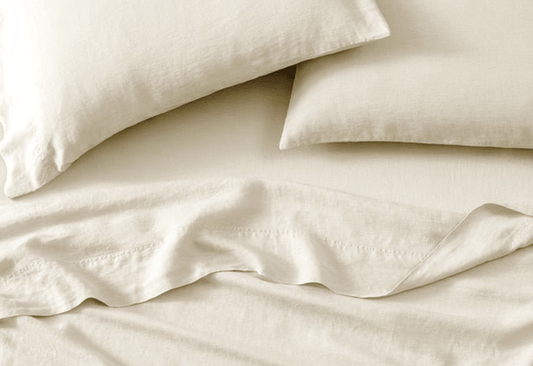
Best Bed Sheets by Type: Cotton, Percale, Sateen, Linen, and Bamboo

The “best” sheet is not a single fabric. It is the one that matches how you sleep — hot or cold, crisp or silky, easy-care or lived-in — and that still feels good after the tenth wash.
Most shoppers get stuck on two labels: cotton and thread count. Cotton is a fiber. Percale and sateen are weaves of that fiber. Linen and bamboo are different materials altogether. Treat them as the same thing and you end up with a set that looks fine in photos and sleeps wrong in real life.
This guide breaks each type down the way people actually use it: how it feels on night one, how it handles heat and sweat, how it wears, and who it is for.
A quick map before you shop
|
Type |
Feel |
Best for |
Warmth |
Look |
|
Cotton (general) |
Depends on weave |
Everyday beds |
Medium |
Familiar, versatile |
|
Percale |
Crisp, cool, matte |
Hot sleepers, hotel feel |
Cooler |
Clean, pressed |
|
Sateen |
Smooth, silky drape |
People who want softness |
A bit warmer |
Subtle sheen |
|
Linen |
Textured, relaxed |
Warm climates, durability |
Cool, airy |
Lived-in rumple |
|
Bamboo (rayon) |
Silky, fluid |
Night sweats, sensitive skin |
Cool, wicking |
Soft drape |
If you only remember one thing: fiber decides the raw material. Weave and knit decide the personality. Certifications decide whether the “soft” feeling is the fabric — or a finish that washes off.
Cotton sheets: the baseline, not a verdict
Cotton is still the default for a reason. The fiber breathes, it washes well, and it can be woven or knitted into almost any sleep feel. That range is also why “cotton sheets” as a search term is almost useless by itself.
What changes the night is staple length, yarn, and construction. Longer staple fibers make smoother, stronger yarns. Combed, ring-spun yarn strips out the short bits that later pill. Organic cotton grown without conventional pesticides, then certified GOTS and OEKO-TEX Standard 100, keeps those chemicals out of the field and out of the finish.
Cotton can be hotel-crisp or t-shirt soft. The next two sections — percale and sateen — are the two woven versions most people mean when they argue about cotton sheets. Jersey is the knit cousin: stretchy, broken-in from night one, a different category.
-
Choose cotton when: you want a familiar, washable everyday sheet and you are willing to pick a weave instead of stopping at the fiber name.
-
Skip generic cotton when: the label only shouts a huge thread count and says nothing about weave, yarn, or certifications.
Percale sheets: crisp, cool, and open

Percale is a plain weave — one thread over, one thread under. That simple grid is why percale feels like a freshly made hotel bed: matte, structured, and cool to the touch. Air moves through the crossings. Sweat does not sit on the surface the way it can on a denser, shinier weave.
The useful thread-count range for cotton percale is roughly 200–300. Bare Home’s organic percale sits at 260: tight enough to feel substantial, open enough that hot sleepers do not wake up damp. Push the same weave much higher and you pack the grid so densely that the “luxury” number starts working against breathability.
Percale wrinkles more than sateen. That is not a defect. It is the trade for a cooler, flatter hand. Remove the set promptly from the dryer if you want it smoother. Or accept the lived-in crease — plenty of people do.
If this is your type, start with the Organic Cotton Percale Sheet Set. It is 100% GOTS-certified organic cotton with organic dyes, a fully elasticized fitted sheet, and the crisp, breathable feel people mean when they say they want “real cotton sheets” that stay cool.
-
Best for: hot sleepers, summer bedrooms, anyone who likes a clean, pressed bed.
-
Less ideal for: people who want silkiness on night one or who hate any wrinkle.
Sateen sheets: smooth, draped, a little warmer
Sateen uses a different crossing — typically three or four yarns over, one under — so more thread sits on the surface. That is the sheen and the silkiness. The fabric drapes instead of standing up. It resists wrinkles better than percale. It also traps a bit more warmth because the surface is denser and less “open.”
Sateen is still cotton. It is not satin (satin is usually a synthetic). The useful count range is higher than percale, often around 300–450, because the weave needs more yarn on the face to create that hand. Bare Home’s organic sateen is 400 thread count: smooth without the multi-ply trick that inflates a label into four digits.
If you run cold, share a bed with someone who likes a silkier sheet, or you want the bed to look slightly dressed even unmade, sateen is the cotton answer. If you already sleep hot, it is usually the wrong cotton answer.
The Organic Cotton Sateen Sheet Set is the Bare Home version: GOTS organic cotton, OEKO-TEX Standard 100, lustrous without being slippery, and built from combed, ring-spun yarn so the softness is the fiber — not a coating.
-
Best for: cool sleepers, people who want a hotel-smooth hand, bedrooms that get a little drafty.
-
Less ideal for: night sweats, or anyone who specifically wants that matte, cool percale snap.
Linen sheets: breathable, textured, built to last

Linen is flax, not cotton. The fibers are longer and stronger. The fabric is measured in weight (GSM), not thread count, which is why linen labels that brag about a huge TC are usually changing the subject.
What you feel is air and texture. Linen wicks moisture quickly, sleeps cool in warm rooms, and has that rumpled, already-lived-in look from the first night. Some people call it slubby. Some people call it the only sheet they will buy again. Both are describing the same thing: a fabric that does not pretend to be perfectly smooth.
Linen also lasts. Flax fibers take abrasion well, and a good set gets softer instead of thinner. The trade is price and the wrinkle. You do not iron linen into submission unless you enjoy that job. You wash it, shake it out, and let the rumple be the aesthetic.
Bare Home’s European Linen Sheet Set is the relaxed, temperature-regulating version of that story — moisture-wicking flax, OEKO-TEX Standard 100, a fully elasticized fitted sheet, and the classic rumple that makes the bed look finished even when it is not hospital-tight.
-
Best for: hot climates, people who want one set that works year-round, anyone who likes texture over sheen.
-
Less ideal for: shoppers who want silky-smooth on night one or who expect a pressed, crease-free bed.
Bamboo sheets: silky cooling, with an honest label
Most “bamboo sheets” are rayon (viscose) made from bamboo pulp, not a woven stalk of grass. The plant is a fast-growing raw material. The fabric you sleep on is a regenerated cellulose fiber: long, smooth, and good at moving moisture off skin.
That is why bamboo sets get recommended for night sweats and sensitive sleepers. The hand is closer to sateen or silk than to percale. The drape is fluid. Temperature regulation is the headline — cool when you are warm, less clammy than a dense cotton sateen when you sweat.
Two caveats belong in any honest guide. First, the plant is renewable; the process that turns pulp into yarn varies by mill, so certifications still matter. Bare Home’s rayon-from-bamboo sets are OEKO-TEX Standard 100, made without the harmful chemical finishes that often ride along in this category. Second, bamboo is not cotton. If you came here for a crisp hotel sheet, this is the wrong aisle.
The Rayon from Bamboo Sheet Set is built for that cool, silky sleep: moisture-wicking, temperature-regulating, 360° elastic on a fitted sheet that holds mattresses up to 15 inches, and a hand that softens with washing instead of going flat.
-
Best for: hot sleepers, night sweats, people who want silkiness without silk care.
-
Less ideal for: anyone chasing a crisp, matte, percale snap.
How to choose in under a minute
-
You sleep hot or wake up damp: percale, linen, or bamboo. Skip heavy sateen.
-
You sleep cold and want a dressed bed: sateen.
-
You want cotton that feels like a hotel: percale.
-
You want cotton that feels like a favorite tee: look at jersey, not a woven sateen.
-
You want texture and a set that lasts a decade: linen.
-
You want silky cooling without silk: bamboo.
Whatever you pick, read past the giant number on the package. Look for the fiber, the weave or knit, pocket depth, and a real clean-standard mark — GOTS for organic cotton, OEKO-TEX Standard 100 across the line. Those details decide whether the sheet you liked in the product photo is the sheet you still like in August.
The short version
Cotton is the family. Percale and sateen are two different personalities inside that family. Linen is the durable, airy cousin from flax. Bamboo is the silky cooler made from regenerated plant fiber. Best is the one that matches your temperature, your texture preference, and a construction you will actually wash without ruining.
If you want the crisp side of cotton, start with organic percale. If you want the smooth side, start with organic sateen. If you want air and rumple, linen. If you want fluid cooling, bamboo. Four types, four different nights — and none of them are solved by a 1,000 thread-count label.
Shop The Products We're Talking About


Keep Reading
The Low-Down on Down