Should You Put a Mattress Pad On for Fall?

Does a mattress pad actually warm the bed?
Air under you vs air over you
A pad is a quilted or filled panel that sits on the mattress, under the fitted sheet. The fill holds a thin layer of still air at the surface. That can take the first-contact chill off a bare foam or a tight knit cover when the room has dropped overnight.
It is a small lever. The duvet or comforter above you holds a much thicker air layer, and you can kick it off. A pad stays put all night. If you already sleep hot, that trapped air under the sheet works against you the same way a membrane protector does.
Pad vs the duvet you already own
If September nights feel sharp at first contact and fine once you are under the covers, change the sheet fabric or add a mid-weight duvet insert before you add height under the sheet. The insert is the layer you can peel. The pad is not.
Pad vs protector when nights drop

Barrier work is not insulation
A protector keeps sweat and spills off the mattress. Shop that job in the mattress pads and protectors collection and pick the thin barrier, not the quilted pad, if all you want is coverage. Waterproof films often sleep a little warmer because air and moisture move through them more slowly. That is a side effect of the membrane, not a fall feature.
Using both in one stack
Order stays the same in every season: mattress, protector, pad, fitted sheet. Fall does not change the order. It changes whether the extra height is worth the pocket-depth problem.
If the protector already makes the surface feel close and warm, skip the pad and keep the sheet breathable. If the mattress feels flat and cold at first contact and you like a little quilting under the sheet, add the pad and measure the stack.
How a fall pad changes pocket depth
Stacked height, not the box label
Pocket depth is measured against stacked height: mattress plus protector plus pad or topper. Bare Home bands are Standard (7 to 14 inches), Deep (15 to 17 inches), and Extra-Deep (18 to 25 inches, including pillow-tops and toppers).
The Clean Classic Memory Foam Mattress is 11 inches tall before anything goes on it. That sits in Standard on its own. A protector plus a quilted pad can push a 14-inch mattress out of Standard. Measure after the layers are on, not from the tag.
When the sheet starts to creep
If the fitted sheet pops at the corners after you add a pad, the pocket depth is wrong, not the elastic. Move to extra-deep pocket sheets when the stack is 18 inches or more. Do not size up in width and hope the extra fabric holds the corners.
A breathable organic cotton percale sheet set still makes sense over a pad in early fall, as long as the pocket matches the new height.
When to skip the pad and change a different layer
Signals the pad is the wrong fix
Skip the pad if you already run hot under a protector. Skip it if the fitted sheet is barely holding now. Skip it if the only complaint is a cold room at 5 a.m. That is an above-the-sheet problem: a throw you can pull up, a mid-weight insert, or flannel against the skin if you know you want nap.
Signals the pad is worth putting on
Put the pad on if the mattress surface feels hard or slick at first contact and you want quilting under the sheet. Put it on if you are using a spare guest mattress that sleeps flatter than the primary bed. Remeasure. Then leave the top layers adjustable.
The short version
A pad is surface loft, not room heat. It holds a thin air layer under the sheet. The duvet above you does more warming work and comes off at 2 a.m.
A protector is a barrier. Leave it on for spills. Do not treat the membrane as a fall blanket.
Order does not change in fall. Mattress, protector, pad, fitted sheet.
Measure stacked height after the pad is on. Standard pockets fit 7 to 14 inches. Deep fits 15 to 17. Extra-Deep fits 18 to 25.
If the sheet pops, change the pocket depth. Do not add another layer on top and hope the corners hold.
Shop The Products We're Talking About


Keep Reading
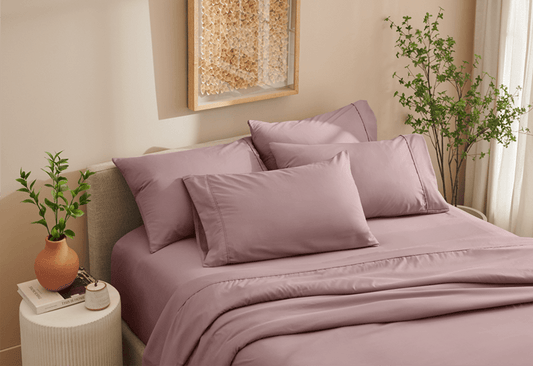
Why Bare Home's Microfiber Sheet Set Is PopSugar's Top Choice for Affordable, Comfortable Bedding from Target
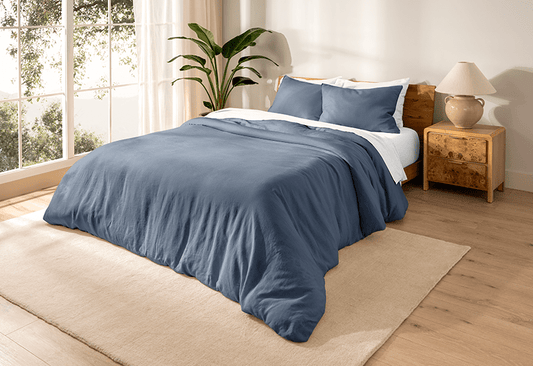
How to Put on a Duvet Cover

Bringing the Outdoors In: How Nature Shapes the Way We Sleep