Why Your Comforter Makes You Sweat at Night

A comforter makes you sweat when air and moisture cannot move through it. The shell fabric and the fill both control that.
Why does my comforter make me sweat
Most of the heat and moisture stays trapped against your body when the outer shell is dense and the fill has nowhere for air to go. The fill itself can also hold moisture if it is a synthetic that does not release it quickly. You feel fine for the first hour, then wake up damp once the heat builds.
The sheet is the layer on your skin. The comforter is the layer that decides whether that moisture can leave. A breathable sheet under a non-breathable comforter still sleeps warm.
What in the comforter is causing it

The shell is the first barrier. A tightly woven polyester or a coated fabric blocks more air than an open cotton or linen weave. If the shell feels smooth and slightly plastic when you rub it, air is not moving freely through it.
The fill is the second. Higher loft or denser fill holds more heat. Down alternative fills vary: some are lightweight and airy, others pack tightly and trap warmth. A comforter that looks fluffy on the bed can still sleep hot if the fill is dense and the shell does not breathe.
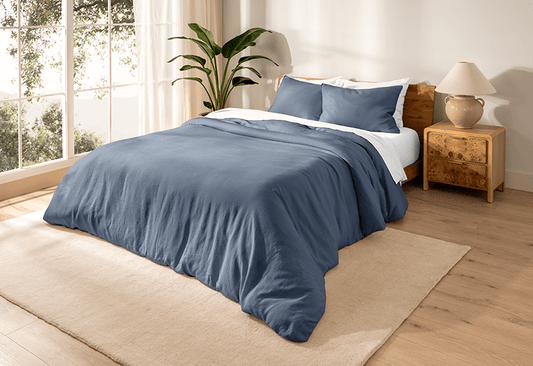
Bare Home’s duvet covers let you change the outer layer without replacing the fill. The duvet inserts are the fill piece that sits inside.
How the rest of the bed adds to it
A heavy comforter over a sateen sheet or a waterproof protector compounds the problem. The protector stops moisture from reaching the mattress, but it can also stop air from moving upward. A topper that traps heat under the sheet does the same.
If you only change the comforter and leave a dense sheet or a non-breathable protector in place, the sweating often continues. Start with the top layer, then check what is under it.
What to change first
Switch to a lighter fill or a cover with an open weave. Many people who run warm do better with a duvet cover in percale or linen over a light insert than with a single heavy comforter. You can also keep a lighter blanket within reach and push the main layer down once the bed warms up.
Bare Home’s hot sleeper collection groups options built around lower heat retention. Pairing an open-weave sheet from the percale collection or linen collection with a breathable cover reduces the chance that moisture stays trapped.
How to test it
Sleep with the comforter pushed to one side for a night and use only a sheet plus a light blanket. If you stay drier, the comforter was the main source. Then try the same comforter with a more open sheet underneath. The difference shows up in whether you wake up damp or need to throw the covers off.
Shop The Products We're Talking About


Keep Reading
How to Put on a Duvet Cover
Bringing the Outdoors In: How Nature Shapes the Way We Sleep