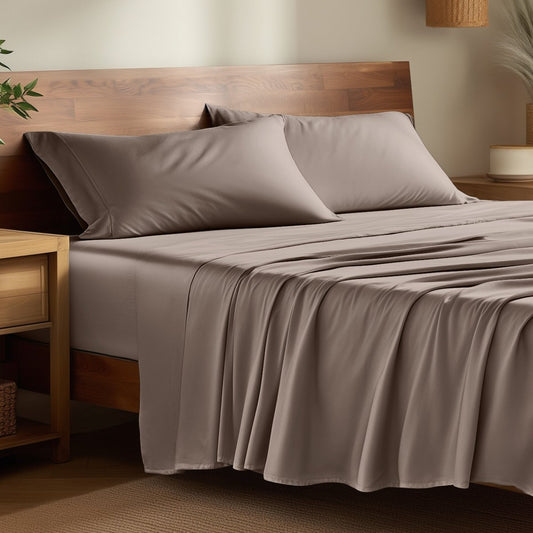
Why Waterproof Mattress Protectors Get Hot and Noisy

A waterproof protector is a fitted sheet with a barrier laminated to the back. That barrier is why a spilled glass does not reach the foam. It is also why some protectors sleep warm and sound like a chip bag when you roll over.
What makes the crackle
Most waterproof layers are a thin plastic film, often polyurethane. When you move, the film flexes against the mattress and the sheet. A stiff or loosely fitted film pops. A protector that tents or is sized for a much thicker mattress than you own has extra slack, so it flexes more and stays louder.
First wash often quiets a new protector. The film relaxes. If it still crackles after two washes and a snug fit, the membrane is the noisy part.
What makes the heat

A continuous film blocks liquid. It also slows vapor. Body heat and sweat sit on your side of the barrier. That is the sauna feel, especially on memory foam.
Thinner membranes and terry or jersey faces usually sleep less plastic than a vinyl-hand pad. Water-resistant layers breathe more and protect less against a soak. Pick the barrier for the risk you have.
What to change first
Fit the protector to stacked height: mattress plus pad. Put a cotton sheet over it, not a slick microfiber sheet that slides on the film. If the bed still sleeps hot, change the sheet weave and the duvet loft next.
Shop mattress pads and protectors. Pair pocket depth with extra-deep pocket sheets on a tall mattress. Everyday sheets: sheets.
The short version
Waterproof means a film. The film stops liquid and slows vapor. That is the heat.
Noise is flex plus slack. A stiff membrane on a loose fit crackles. Wash once and pull it tight before you judge it.
Fit follows stacked height. Measure mattress plus pad. Pocket depth is the same problem as fitted sheets.
Cooling labels do not cancel plastic. Change membrane thickness and the sheet on top before you chase a finish.
Shop The Products We're Talking About


Keep Reading
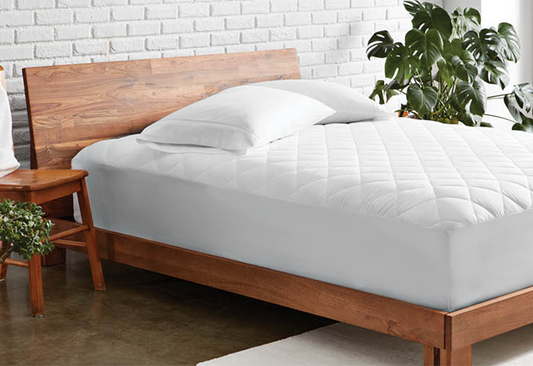
Mattress Pad vs Protector: What Goes on the Bed

Split King Bedding: What Actually Fits